A new study shows that the data and technological demands of the carbon market concentrate control in a handful of consulting firms that run 70% of Australia's land-based projects, leaving communities dependent on external expertise.
Restoration economic strategies are growing with unprecedented market incentives to bring degraded ecosystems back to health. The Australian Carbon Credit Unit (ACCU) Scheme pays for carbon removal and storage achieved through native vegetation recovery, fire management, sustainable farming and healthier soils. Yet a new study reveals that this carbon farming opportunity is shutting local communities out of project leadership.
Running a carbon project is now a data-heavy enterprise. Project holders work with satellite imagery, mapping software, biophysical models and standardised reporting. Meeting the carbon market rules calls for setting baselines, measuring project performance, and reporting outcomes using specialised data analysis skills. Published in Digital Geography and Society, the study finds that such data-driven requirements push rural and remote communities away from project leadership. Patchy connectivity, limited access to technological tools, constrained digital capabilities and unreliable carbon methods make an independent project hard to run across Australian regions.
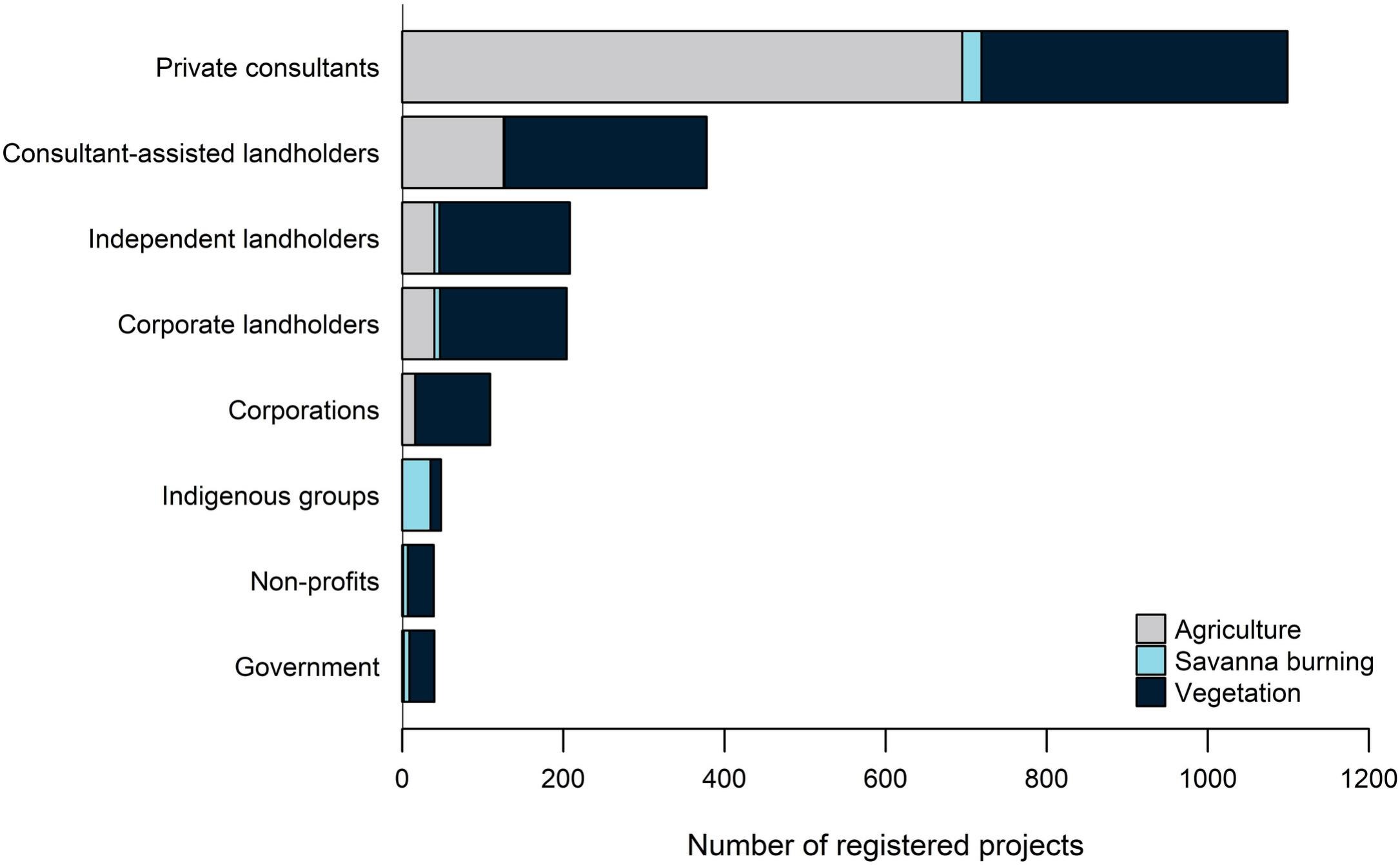
Into that gap step large private consultants. A small number of firms control the advisory services behind 70% of land-based carbon abatement across the country. The article shows that private consults hold legal ownership of just over half of all projects and act as paid agents in a further 18%. Landholders and Indigenous communities carry out the on-ground work, while consulting firms manage the compliance and reporting that market trading demands. Consulting contracts can direct around 30% of a project's carbon credits to these firms. Independent projects remain rare. The study found that only 10% of Australia's land-based carbon projects are locally-led without any consulting firm involvement. Of those, just around 200 are independent landholder projects, and only 36 are led by Indigenous organisations.
Led by Dr Danilo Urzedo in collaboration with CSIRO researchers, the study highlights the core reasons and consequences of this centralisation of carbon farming projects. The study explains that the limited representation of communities in project leadership reflects regulatory norms and standards centred on data-driven evidence and technological practices. These requirements position consulting firms as the organisations best equipped to develop and manage carbon projects. "The concentration of data expertise centralises restoration benefits and displaces responsibility onto communities, creating critical risks for local participation and for delivering on the promise of carbon markets as a route to regional socioeconomic transformation," Danilo says.
The authors describe these obstacles as "carbon data frictions", where local restoration efforts struggle to move data between standards, digital tools, platforms, and land management practices. These frictions reveal the political and economic workings of the carbon market, exposing both the constraints communities face and opportunities for change.
Alternative responses to digital technologies for carbon farming are also emerging through community-led innovation. The Queensland Government runs the Land Restoration Fund (LRF), which considers multiple benefits when funding carbon farming. The program accounts for socioeconomic, Indigenous and environmental co-benefits through a co-benefits standard, supported by co-benefit datasets and models, to amplify the benefits of carbon farming.

In Queensland's Granite Belt, peer-to-peer learning for woodland restoration is supported by locally co-designed digital tools that reflect place-based needs. These local digital practices let landholders and communities collaborate on projects under their own data governance, loosening the grip of outside intermediaries. For now, such efforts remain isolated, with little support or incentive to spread across regions. The article points out that promoting a transformative restoration economy will require close attention to the social and political relations shaping the intersection of carbon markets and emerging digital technologies.
Urzedo, D., Dumbrell, N. P., & Robinson, C. J. (2026). Data friction in digital climate advisory services for carbon farming in Australia. Digital Geography and Society. 10.1016/j.diggeo.2026.100190