Ecological restoration is a central strategy for addressing the climate, biodiversity, and land degradation crises. Global commitments aim to restore millions of hectares of native vegetation, yet investment and incentive models prioritise biophysical and financial outcomes, assuming sociocultural contributions are co-benefits that unintentionally emerge. Widespread monitoring and evaluation methods also overlook the complexity of institutional conditions, local capacities, power relations, and forms of collective organisation that sustain long-lasting restoration benefits.
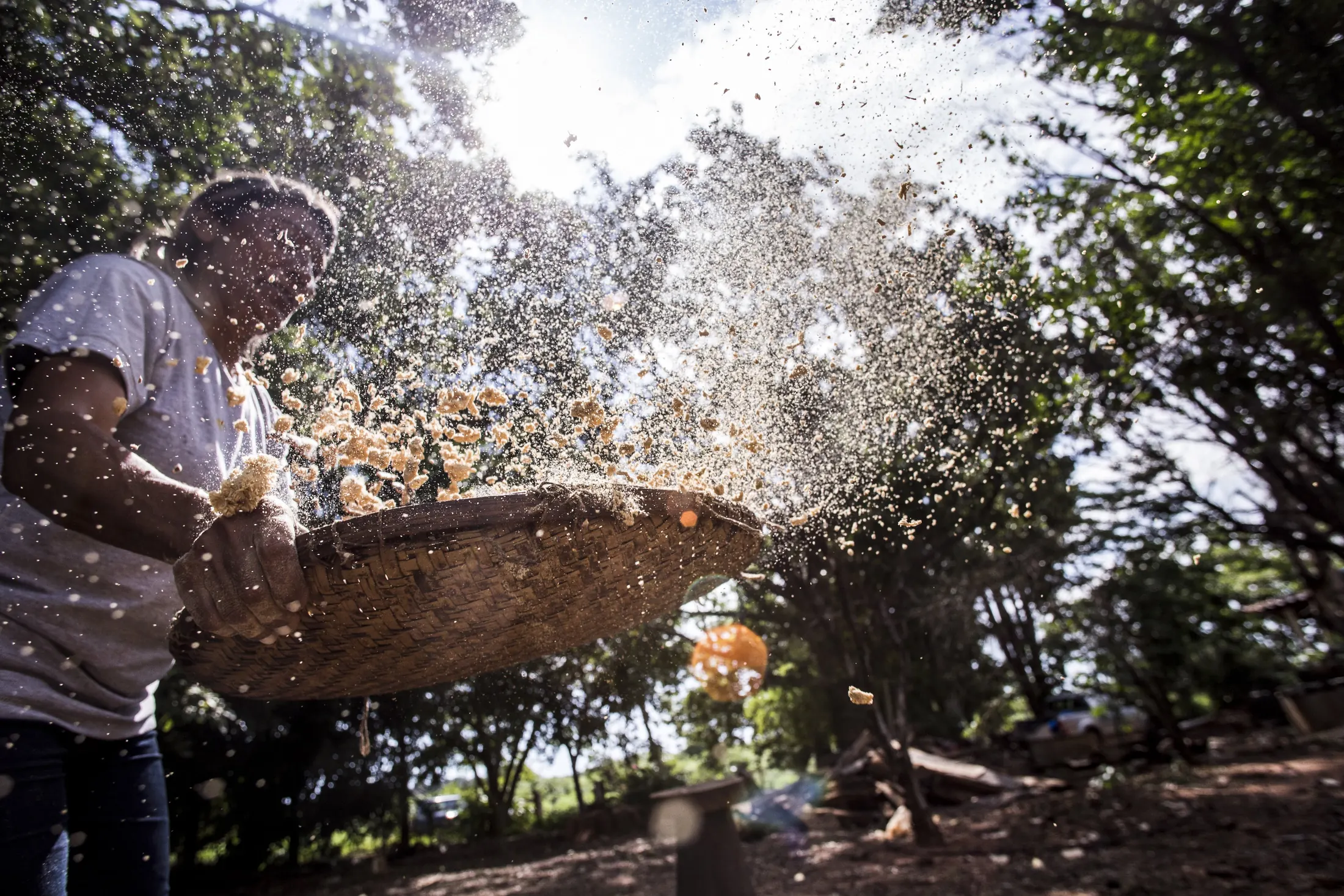
This project investigates how the sociocultural benefits of community-based restoration can be locally mapped, analysed, and reported in ethical and collaborative ways. Working with community-based networks of seed collectors in the Amazon and Cerrado, the research co-designs and tests a range of practical tools, indicators, and analyses that recognise the relational values overlooked by conventional monitoring instruments.
Significance
In Brazil, community-based networks show how restoration actions can gain scale in ways aligned with territorial sovereignty, intergenerational knowledge, and cultural strengthening. Yet current market incentives and financial revenue are insufficient to cover the allocations required for community mobilisation, territorial coordination, capacity building, and knowledge transmission that sustain durable restoration benefits. While restoration finance is expanding, existing grants and markets demand practical methodological applications for valuing the sociocultural dimensions that underpin impactful restoration efforts in community contexts.
Drawing on the Intergovernmental Science-Policy Platform on Biodiversity and Ecosystem Services (IPBES) lens of plural values of nature, the research includes two case studies of Brazilian restoration experiences to collaboratively build evidence and methods that support community assessments. The project will create applied instruments and recommendations that support the inclusion of sociocultural considerations in finance mechanisms and local project reporting, recognising the efforts and achievements of Indigenous Peoples, traditional communities, and local groups.